
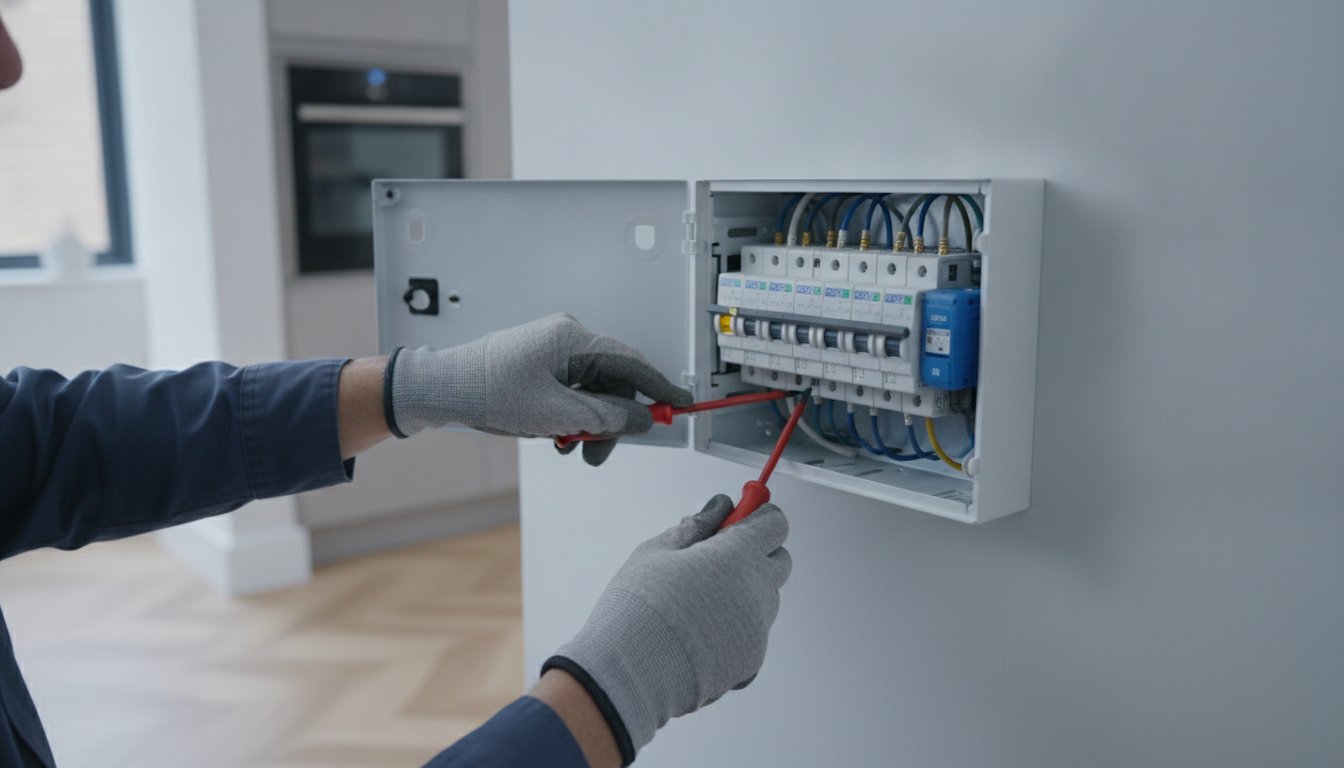
Is the very device meant to protect your property actually its greatest hidden vulnerability? For many homeowners, an outdated fuse box is a silent risk that simply wasn't built to manage the intensive electrical demands of 2026. It's natural to feel concerned about fire safety or confused by technical terms like RCBOs and SPDs, especially when insurance requirements and selling standards become increasingly stringent. You deserve a home that's both safe and fully compliant with the latest national regulations.
This guide explains why a professional consumer unit upgrade is the most critical safety investment you can make for your property. We'll break down the BS 7671:2018+A4:2026 standards and clarify how modern components provide genuine peace of mind. You'll learn about the mandatory requirements of Amendment 4, the essential role of surge protection, and how to prepare your electrical system for high-load technologies like EV chargers and heat pumps.
Key Takeaways
- Understand why your home's electrical safety relies on a modern consumer unit upgrade to manage the power demands of 2026 appliances and technologies.
- Identify the critical life-saving components, such as Residual Current Devices (RCDs), that provide protection far beyond the capabilities of an old-fashioned fuse box.
- Learn to recognise physical warning signs like flickering lights or discoloured casings that indicate your current electrical infrastructure is failing.
- Discover why a pre-installation circuit check is a non-negotiable step in a professional installation to ensure your home's wiring is fit for a modern system.
- Understand the importance of using NICEIC-approved contractors to guarantee that all work meets the rigorous technical standards of the 18th Edition Amendment 4.
Understanding the Modern Consumer Unit and its Critical Role in Home Safety
The consumer unit serves as the central control hub for your property's electrical system. It acts as the brain of your home's infrastructure, constantly monitoring the flow of electricity to ensure every circuit operates within safe limits. Whilst many residents still refer to this equipment as a 'fuse box', that term is technically obsolete for any modern installation. A traditional fuse box relies on sacrificial wire that melts during a fault, whereas a contemporary unit uses sophisticated mechanical switches and electronic sensors to manage power.
A consumer unit upgrade is often the first step in modernising a property because it performs three vital functions: distribution, protection, and isolation. It distributes power from the mains supply to individual circuits like lighting and sockets. More importantly, it provides protection by instantly disconnecting power if it detects a fault. Finally, it allows for safe isolation, enabling you or an electrician to turn off specific sections of the home without plunging the entire building into darkness. Understanding the Modern Consumer Unit involves recognising how these devices have evolved from simple wire holders into high-tech safety barriers.
From Rewireable Fuses to Smart Power Distribution
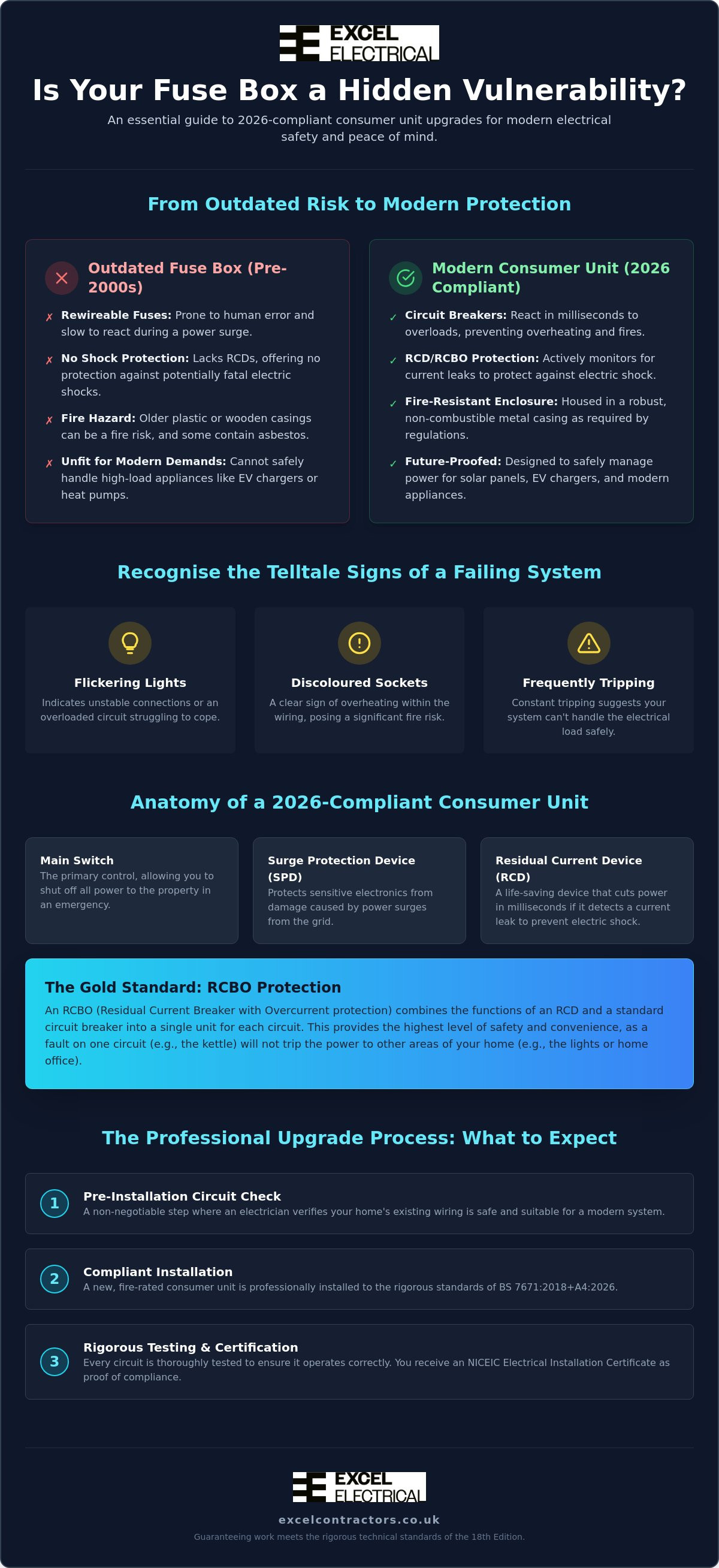
Old-style 'bridge' fuses, common in the 1970s and 80s, carry inherent risks that modern systems have eliminated. These older boards often featured asbestos linings and required homeowners to manually wrap fuse wire around ceramic carriers. This process was prone to human error and slow to react during a surge. In contrast, modern circuit breakers react in milliseconds to prevent overheating and potential fires. Today's 'populated' boards are also modular. This allows your electrician to add or swap components easily, ensuring the system can be tailored to your specific needs as your home evolves.
Why the 18th Edition Regulations Matter in 2026
The 18th Edition is the national standard for electrical safety in the UK. Following the publication of Amendment 4 in April 2026, the BS 7671:2018+A4:2026 regulations now dictate exactly how a consumer unit upgrade must be performed to remain legal and safe. Adhering to these standards isn't just about safety; it's a legal necessity. All domestic electrical work must comply with Part P of the Building Regulations. This ensures that any modifications are certified, recorded, and capable of protecting the occupants from modern electrical hazards. Professional standards have moved far beyond simple 'tripping' switches to include advanced protection against power surges and arc faults.
Essential Components of a 2026-Compliant Consumer Unit Upgrade
A modern electrical installation relies on a sophisticated array of components designed to work in unison. The foundation of any system is the Main Switch. This component serves as your primary point of electrical isolation, allowing for the entire power supply to be disconnected instantly in an emergency. Whilst the Main Switch provides control, it does not offer the nuanced protection required by modern safety standards. For landlords and homeowners alike, ensuring a 2026-Compliant Consumer Unit Upgrade is essential for meeting the latest safety standards outlined in government guidance.
Traditional systems often relied on Miniature Circuit Breakers (MCBs) alone. These are designed to prevent cable overheating by tripping when a circuit is overloaded. However, they cannot detect the tiny leakages of current that cause fatal electric shocks. This is where Residual Current Devices (RCDs) become vital. An RCD monitors the balance of electricity and disconnects the circuit within 40 milliseconds if it detects a leak to earth. In a modern consumer unit upgrade, the industry is moving away from 'Dual RCD' boards, which can plunge half the house into darkness during a single fault, towards more resilient configurations.
RCBOs: The Gold Standard for Circuit Protection
Residual Current Breaker with Overcurrent protection (RCBO) modules represent the pinnacle of domestic safety. These devices combine the functions of an MCB and an RCD into one single unit for every individual circuit. The primary benefit is fault discrimination. If a toaster faults in the kitchen, only the kitchen circuit trips; your lights, fridge, and home office remain powered. This prevents the 'nuisance tripping' associated with older split-load boards. If you are unsure about your current board's configuration, you might consider a professional assessment of your domestic electrical services to ensure your protection is up to date.
Surge Protection Devices (SPD) and Voltage Spikes
Modern homes are filled with sensitive microprocessors in everything from smart TVs to EV chargers. These components are easily damaged by transient overvoltages caused by lightning strikes or grid switching. Under the latest BS 7671:2018+A4:2026 regulations, Surge Protection Devices (SPDs) are mandatory for most domestic dwellings. An SPD acts as a sacrificial barrier, diverting excess voltage safely to earth before it can reach and destroy your expensive electronics.
Arc Fault Detection Devices (AFDD): The New Safety Frontier
Arc Fault Detection Devices (AFDDs) address a danger that standard breakers often miss: the arc fault. This occurs when damaged cables, loose connections, or crushed wires create a small, intense spark that generates enough heat to start a fire without tripping a traditional fuse. As of April 2026, AFDDs are required on socket circuits up to 32A in high-risk properties such as Houses in Multiple Occupation (HMOs) and care homes. They are also strongly recommended for bedrooms and sleeping areas in standard domestic properties to mitigate the primary cause of electrical fires.
Recognising the Indicators That Your Electrical System Requires an Upgrade
Identifying the early warning signs of an aging electrical system is vital for maintaining a safe living environment. Many homeowners overlook subtle physical indicators until a significant failure occurs. If you notice flickering lights, audible buzzing sounds from the board, or discoloured plastic around the casing, these are symptoms of heat damage and loose connections. A consumer unit upgrade becomes a priority when these physical defects manifest, as they often precede electrical fires.
Visual inspection can also reveal obsolete infrastructure. If your equipment is mounted on a wooden backboard or housed in a cast-iron casing, it's likely several decades old and lacks modern safety features. A critical red flag is the absence of a 'Test' button. This indicates that your system lacks RCD protection, leaving occupants vulnerable to fatal electric shocks. Frequent 'tripping' is another symptom of an overloaded or faulty older circuit that can no longer cope with the simultaneous use of modern appliances.
Accommodating Modern Electrical Demands
Our homes have changed significantly since most 'fuse boxes' were installed. High-capacity technologies like EV chargers and heat pumps place immense strain on older infrastructure. Attempting to 'daisy-chain' these high-load devices on existing circuits is dangerous and can lead to thermal damage. Preparing your home for solar PV, battery storage, or sustainable energy solutions from specialists like Simmaxx requires a robust, high-capacity board. A modern consumer unit upgrade ensures your home's 'brain' can safely manage these 2026 energy demands without risk of failure.
While upgrading your electrical system to handle modern energy demands, you may also wish to consider other property improvements. To refresh your home's aesthetic appeal alongside these safety works, you can explore Interior Painting with BrightWise Handyman.
Major Home Improvements and Legal Compliance
Significant renovations often necessitate an electrical modernisation. Undertaking a home rewiring or a kitchen renovation usually triggers a mandatory upgrade to meet current building regulations. Compliance is equally important for administrative reasons. An outdated system can invalidate your building insurance or complicate a property sale. To ensure your home is 'sale-ready', a professional EICR testing report is essential. This document verifies that your installation meets the standards defined for NICEIC Approved Installations, providing the necessary certification for legal and safety purposes.
The Professional Installation Process: What to Expect During an Upgrade
A consumer unit upgrade is a rigorous engineering task that goes far beyond a simple equipment swap. The process begins with a comprehensive site survey to evaluate the condition of your existing earthing and bonding arrangements. These protective conductors are the foundation of your home's safety; if they are undersized or poorly connected, even the most advanced consumer unit cannot function correctly. A methodical professional will verify these connections before any new hardware is installed.
Once the assessment is complete, the physical installation typically requires a power outage lasting between three and eight hours. During this window, the electrician meticulously transfers every circuit to the new board. This isn't merely about reconnecting wires. Each circuit is tested for insulation resistance and continuity, then clearly labelled to ensure you know exactly which switch controls which area of your home. If you require a professional assessment of your current system, our team provides expert electrical maintenance to identify necessary improvements.
Pre-Installation Fault Finding
Modern components like RCBOs are far more sensitive than older fuses. This sensitivity means that a new board might immediately 'trip' if there is a pre-existing fault in your home's wiring that the old fuse box simply ignored. A consumer unit upgrade often reveals underlying wiring issues that must be addressed for safety. By identifying these hidden faults during the pre-install check, your electrician ensures that the final system is stable and free from nuisance tripping once commissioned.
Certification and Local Authority Notification
The installation is not legally complete until the correct paperwork is issued. Upon completion, you will receive an Electrical Installation Certificate (EIC), which documents the test results for every circuit. Under the 18th Edition Amendment 4, your contractor must also notify the local authority building control through the Part P scheme. These documents are vital for future property transactions, insurance validity, and demonstrating that your home meets the rigorous standards of 2026. Without this certification, you may face significant hurdles when selling your property or making a claim.
Ensuring Long-Term Reliability Through NICEIC Approved Installations
The technical complexity of a consumer unit upgrade means it must never be treated as a casual DIY task or a job for an uncertified handyman. Whilst a general tradesperson might offer basic repairs, they lack the legal authority and technical depth to certify a modern installation under the 18th Edition Amendment 4. NICEIC approval isn't just a static badge. It represents a rigorous, annual auditing process where an external assessor examines a contractor's sample work, test equipment calibration, and technical records. This ensures that every professional who wears the logo maintains the highest possible standards of safety and workmanship.
This level of oversight provides a vital safety net known as the Platinum Promise. This scheme protects you by ensuring that if any work is found to be non-compliant with the building regulations, the NICEIC will step in to resolve the issue. Aligning your new hardware with a broader preventive electrical maintenance strategy is the most effective way to protect your property investment. It transforms a one-off installation into a long-term safety programme that adapts as your household needs change and your electrical load increases.
The Value of TrustMark and NICEIC Accreditation
TrustMark is the government-endorsed quality scheme designed to help consumers find reputable tradespeople. It signifies that a firm has been vetted not just for technical skill, but also for financial stability and customer service standards. For high-end residential projects, using an accredited firm is essential for maintaining property value and ensuring insurance validity. The peace of mind that comes from hiring a vetted, insured firm cannot be overstated, especially when dealing with the high-stakes nature of domestic electricity and fire prevention.
Ongoing Maintenance and Periodic Inspections
Safety requires consistent vigilance even after a successful installation. You should exercise the 'T' for Test button on your RCDs or RCBOs every six months to ensure the mechanical components don't seize over time. Beyond this basic check, you must schedule a formal Electrical Installation Condition Report (EICR). For homeowners, this is typically recommended every ten years, whilst landlords must comply with a mandatory five-year cycle. Regular testing ensures your consumer unit upgrade continues to perform its life-saving functions as you add new technologies like solar PV or smart home systems to your property.
Securing Your Home's Electrical Future
A consumer unit upgrade is far more than a simple hardware replacement; it's a fundamental infrastructure reset that ensures your home meets the rigorous safety and capacity demands of 2026. By integrating advanced components such as RCBOs and surge protection, you protect your sensitive electronics and significantly reduce the risk of domestic fires. This modernisation provides the dual benefits of total peace of mind and full compliance with the latest national safety standards. Ensuring your system is capable of handling modern loads like EV chargers is a vital step in future-proofing your property.
As a NICEIC Approved Contractor and TrustMark Registered firm, we prioritise technical precision and transparent communication. Our team ensures that every installation is fully certified and compliant with 18th Edition (Amendment 2) standards, providing you with the necessary documentation for insurance and future property sales. We take pride in our methodical approach, ensuring your electrical system remains a stable foundation for your home life.
Take the first step toward a safer home today. Request a Professional Quote for Your Consumer Unit Upgrade and let our qualified experts provide the reliable protection your household deserves.
Frequently Asked Questions
How long does a consumer unit upgrade typically take to complete?
A professional installation usually takes between 3 to 8 hours to complete. The exact duration depends on the number of circuits in your property and the condition of the existing earthing and bonding. Your electrician must perform rigorous testing both before and after the physical swap, which accounts for a significant portion of this time window.
Can I legally replace a consumer unit myself if I am competent at DIY?
No, you cannot legally replace a consumer unit yourself. This work is strictly classified as "notifiable" under Part P of the Building Regulations. It must be carried out and certified by a registered competent person, such as an NICEIC-approved contractor. Attempting this yourself is dangerous and will likely invalidate your home insurance and complicate future property sales.
Will upgrading my fuse box stop my electrics from tripping constantly?
A consumer unit upgrade can resolve tripping caused by an overloaded old system, but it may also reveal hidden faults. Modern RCBOs are far more sensitive than old fuses. If your electrics continue to trip after an upgrade, it's usually because the new board has detected a genuine wiring fault that your old system was simply ignoring.
What is the difference between an RCD and an RCBO in a modern board?
An RCD provides earth-leakage protection for a group of circuits, whilst an RCBO provides that same protection for just one individual circuit. The primary advantage of an RCBO is fault discrimination. If a fault occurs on your kitchen circuit, only that circuit will trip, leaving the rest of your home's lighting and power unaffected.
Do I need to have my whole house rewired if I upgrade the consumer unit?
Not necessarily. An upgrade can often be performed on existing wiring provided the cables are in a safe and serviceable condition. Your electrician will conduct a pre-installation survey to check the integrity of your circuits. If this assessment reveals dangerous degradation, a partial or full rewire may be required to meet 2026 safety standards.
Is a Surge Protection Device (SPD) a legal requirement in 2026?
Yes, the installation of an SPD is now a mandatory requirement for all new domestic consumer units under BS 7671:2018+A4:2026. These devices are essential for protecting sensitive modern electronics and microprocessors from transient overvoltages. Without an SPD, a single power surge from the grid or a nearby lightning strike could permanently damage your appliances and EV charger.
How much disruption should I expect during the installation process?
You should prepare for a total power outage for the duration of the consumer unit upgrade, which typically lasts most of the working day. Electricians will need clear access to the board and will occasionally need to enter different rooms to test sockets and light fittings. It's advisable to switch off computers and sensitive electronic equipment before the work begins.
What documents should I receive from my electrician after the upgrade is finished?
You must receive an Electrical Installation Certificate (EIC) which details the results of the safety tests performed on your circuits. Additionally, you will receive a Building Regulations Compliance Certificate, often sent via post or email after the local authority has been notified. These documents are vital proof of safety for insurance companies and future property buyers.


