
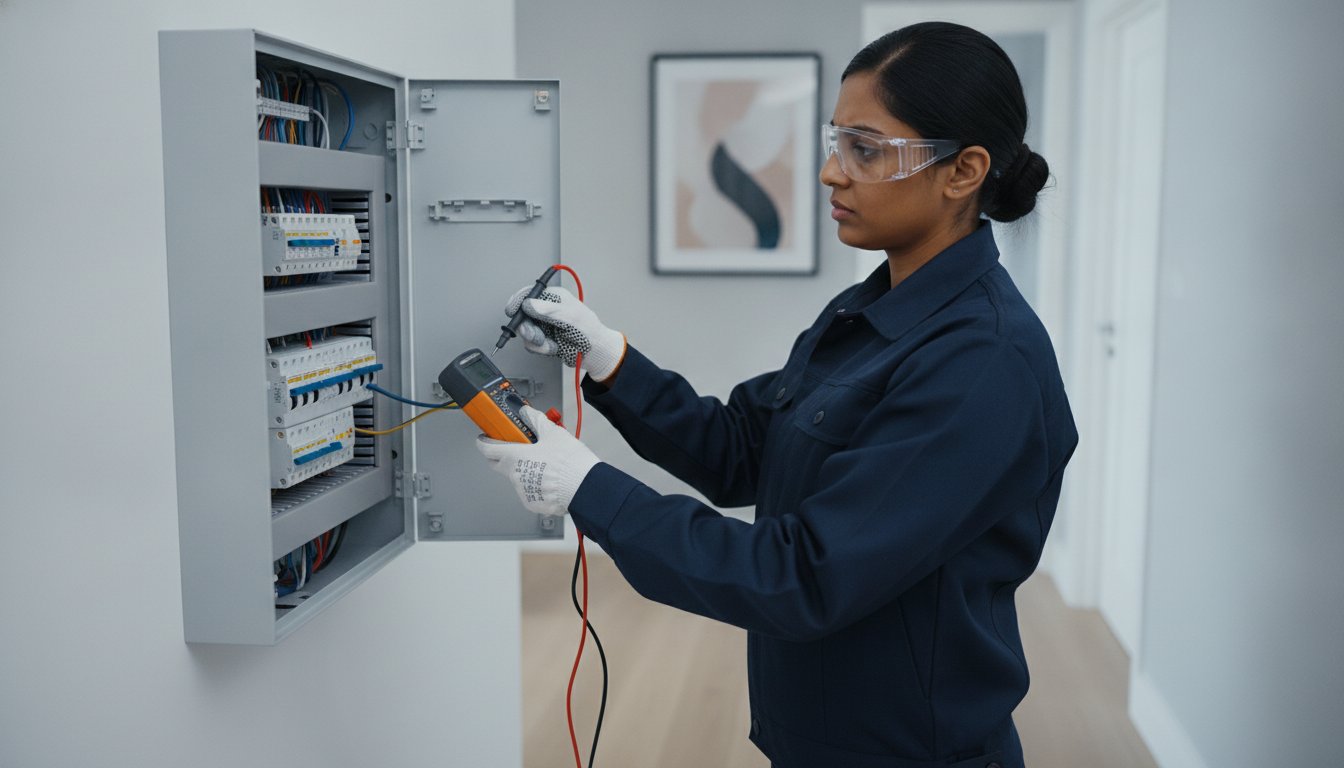
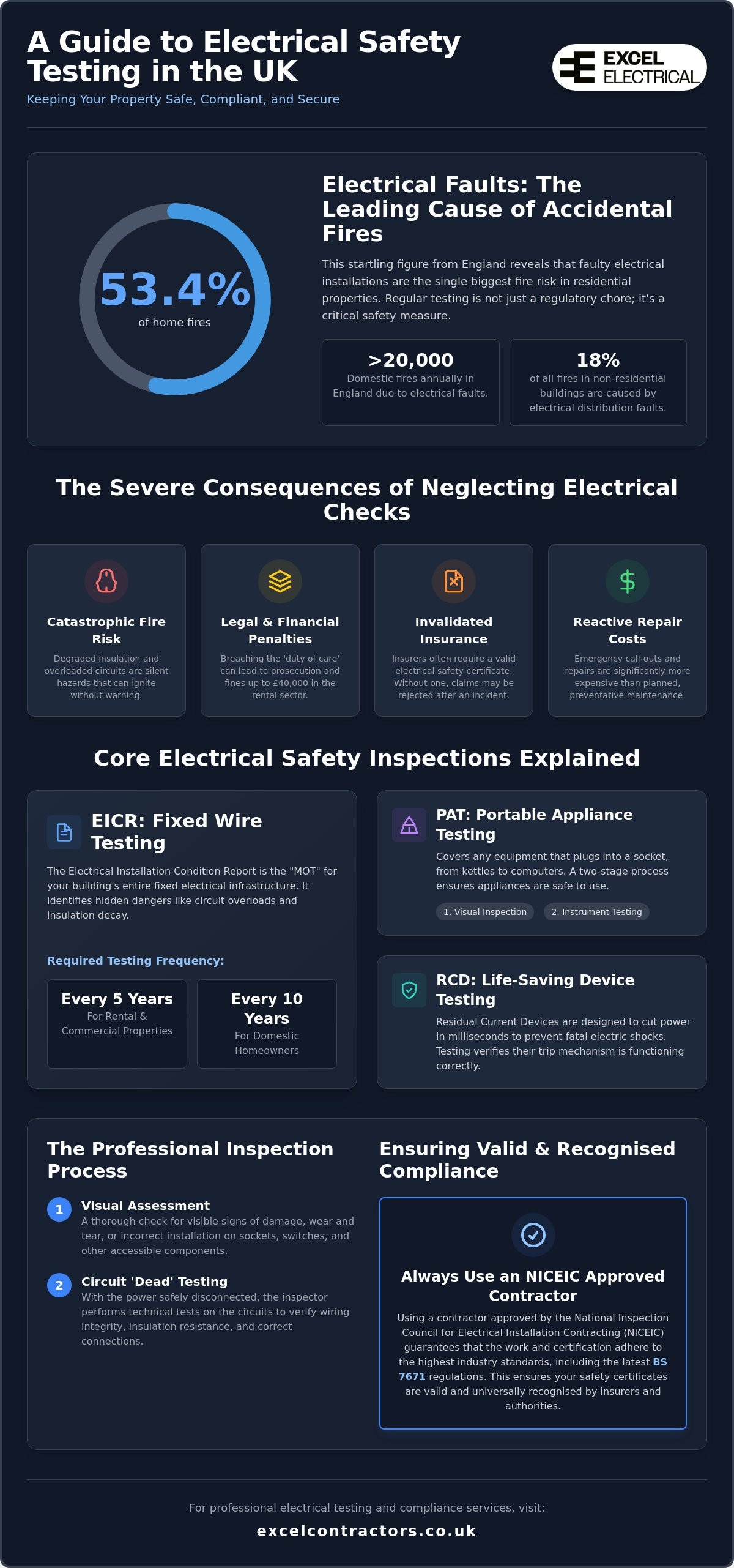
Did you know that electrical faults are the leading cause of accidental fires in UK homes, responsible for 53.4% of all accidental dwelling fires in England? This startling figure highlights why regular electrical testing is far more than a regulatory hurdle; it's a critical diagnostic for your property's safety. It's completely understandable if the alphabet soup of EICRs, PAT, and RCDs feels overwhelming, or if you're anxious about the potential for failing an inspection as new standards like BS 7671:2018+A4:2026 take effect.
You deserve clarity and the peace of mind that comes from knowing your installation is both safe and legal. This guide serves as a comprehensive reference for UK property owners, detailing the specific regulations and professional standards you need to follow. We'll explain the different types of inspections, the mandatory qualification changes for 2026, and exactly what happens during a professional assessment so you can ensure your property remains compliant without the stress.
Key Takeaways
- Understand how systematic inspections prevent electrical fires and ensure the long-term safety of your property's infrastructure.
- Learn the critical differences between an EICR and PAT to determine which form of electrical testing your property requires for full compliance.
- Discover your legal obligations under the Electricity at Work Regulations 1989 and how to maintain a documented duty of care.
- Gain a clear insight into the professional inspection process, including visual assessments and technical circuit dead testing.
- Identify the essential qualifications and industry accreditations, such as NICEIC approval, required to ensure your safety certificates are valid and recognised.
The Fundamentals of Electrical Testing for Property Safety
Professional electrical testing is a methodical examination of an entire electrical installation. It isn't just a visual check; it's a systematic diagnostic process designed to ensure that every component, from the consumer unit to the final socket outlet, functions safely. The primary objective is to identify defects that could lead to electric shocks, burns, or electrical fires before they cause harm. Whether you're managing a domestic home or a complex commercial site, these inspections provide a verifiable baseline of safety and infrastructure integrity.
We categorise these checks into two main areas. "Fixed wiring" refers to the permanent electrical infrastructure of a building, including the cabling, switches, and distribution boards. In contrast, "portable appliances" include any equipment that plugs into this system, such as kettles or office computers. Both systems require distinct maintenance schedules to protect the people using the property.
Why Regular Testing is Non-Negotiable
Electrical infrastructure is largely invisible, which makes it easy to ignore. Cables routed behind plasterboard or under floorboards are subject to silent degradation over many years. Environmental factors like moisture in older properties or excessive heat from overloaded circuits accelerate the breakdown of cable insulation. Regular electrical safety testing uncovers these hidden hazards before they manifest as dangerous failures. It's also a matter of financial protection. Most building insurance providers now require proof of up-to-date testing to validate a policy. If an incident occurs and you can't provide a valid certificate, your insurer might refuse to pay the claim.
The Consequences of Neglecting Electrical Checks
The risks of oversight are severe and often catastrophic. Data from 2024/25 shows that electrical distribution faults are the largest identifiable cause of fires in non-residential buildings, accounting for 18% of all incidents. In domestic settings, electrical faults cause over 20,000 fires annually in England. Beyond the physical danger, property owners face significant legal liability. Under the Electricity at Work Regulations 1989, employers and landlords have a strict duty of care to maintain safe electrical systems. Neglect can lead to prosecution and fines of up to £40,000 for non-compliance in the rental sector. From a purely financial perspective, planned electrical testing is far more efficient than reactive emergency repairs. Reactive work usually involves higher labour rates and unexpected downtime, whilst scheduled maintenance allows for controlled budgeting and minimal disruption to your daily operations.
Core Testing Categories: EICR, PAT, and Emergency Systems
Effective property management requires a layered approach to safety. Professional electrical testing isn't a single event but a suite of specific procedures tailored to different parts of your infrastructure. One vital component often overlooked is Residual Current Device (RCD) testing. These devices are designed to disconnect power instantly if a fault is detected, preventing fatal shocks. We verify these "trip" mechanisms to ensure they react within milliseconds, providing a critical last line of defence for occupants.
Understanding the EICR (Fixed Wire Testing)
The Electrical Installation Condition Report (EICR) is the cornerstone of fixed wiring safety. Think of it as the MOT for your building's electrical health. It covers the distribution board, all internal cabling, and fixed accessories like sockets and light switches. For domestic homeowners, a ten-year interval is usually sufficient. However, for commercial premises and rental properties, a five-year frequency is the standard requirement. This ensures that the infrastructure hasn't degraded through heavy use or environmental stress. It's a methodical process that identifies overloaded circuits and potential fire risks hidden from view.
The Role of PAT in Workplace Safety
Portable Appliance Testing (PAT) addresses everything that plugs into a wall socket. This ranges from a simple office kettle to complex industrial lathes. The process starts with a thorough visual inspection to spot frayed cables or cracked plugs. We then use specialised instruments to check earth continuity and insulation resistance. Maintaining a portable appliance register is essential for your compliance logs. It demonstrates a proactive approach to safety and simplifies the management of equipment lifecycles. Regular checks ensure that your equipment, such as exhibition lightboxes UK, doesn't become a liability in the workplace.
Specialised Testing for Emergency and Fire Systems
Emergency systems require their own dedicated schedule to remain reliable. Emergency lighting must undergo monthly functional checks and annual "soak tests" to ensure the batteries last for the full three-hour duration during a power outage. Fire alarm circuits and smoke detectors also need regular integrity checks to guarantee they function when it matters most. Whilst UK regulations are the priority, understanding international safety protocols, such as OSHA electrical testing regulations, can help facility managers implement even more robust safety frameworks for high-voltage systems. Coordinating these various requirements doesn't have to be complex. You can streamline your compliance by booking your commercial electrical services with a provider who understands the full scope of these testing categories.
Statutory Requirements and the Electricity at Work Regulations
Legal compliance in the UK is governed by several interlocking pieces of legislation, but the Electricity at Work Regulations 1989 (EAWR) remains the primary statute. This law places a strict duty of care on employers, landlords, and building managers to ensure that all electrical systems are maintained in a safe condition. Whilst the EAWR provides the legal framework, the technical standards for achieving safety are defined by BS 7671. As of April 2026, the active standard is BS 7671:2018+A4:2026. Adhering to these 18th Edition protocols is the most reliable way to demonstrate that you've met your statutory obligations.
Regular electrical testing is the only objective method to verify that an installation remains safe for continued use. This isn't just about avoiding accidents; it's about building a robust legal defence. If an electrical incident occurs, the Health and Safety Executive (HSE) will look for evidence of a systematic maintenance programme. Without up-to-date certificates, property owners face significant legal exposure, including the potential for criminal prosecution. Furthermore, most commercial insurance policies specifically require proof of testing to remain valid. Neglecting these checks can lead to the total withdrawal of cover, leaving a business vulnerable to catastrophic financial loss.
Landlord Obligations and Safety Certificates
The Electrical Safety Standards in the Private Rented Sector (England) Regulations 2020 made 5-year testing mandatory for all private tenancies. This requirement was extended to the social rented sector on 1 November 2025. For existing social housing tenancies, landlords must ensure the first inspection is completed by 1 November 2026. Landlords must provide a copy of the EICR to new tenants before they move in and to existing tenants within 28 days of the test. The financial stakes are high; since November 2025, the maximum fine for non-compliance has increased to £40,000. Failure to provide valid safety documentation can also impact a landlord's "Right to Rent" and their ability to issue certain eviction notices.
Commercial Compliance for Employers
The Inspection Process: What Happens During Professional Testing
Professional electrical testing follows a rigorous technical sequence to ensure no part of the system is overlooked. It begins with a comprehensive visual inspection. We look for immediate physical hazards like heat damage at the consumer unit, exposed live parts, or incorrectly installed accessories. This visual stage often identifies a significant portion of faults before a single instrument is even connected. It requires a keen eye for detail and a deep understanding of how electrical components degrade over time.
Following the visual check, we perform "dead testing" whilst the power is safely disconnected. This includes continuity checks to verify that cables are unbroken and insulation resistance tests to ensure the protective casing around wires hasn't perished. Finally, we conduct "live testing" to verify that protective devices, such as RCDs, react within the required milliseconds to prevent injury. This multi-stage approach provides a complete picture of the installation's health, from the physical condition of the hardware to the invisible integrity of the circuits.
Step-by-Step Breakdown of a Site Visit
Preparation is the first priority. We identify every circuit and notify occupants before any power shutdowns occur to minimise disruption. We then methodically test every individual circuit within the consumer unit, recording precise data for each. Professional testers use calibrated instruments to measure resistance in ohms. This structured approach ensures every socket, light fitting, and fixed appliance is accounted for. If you need a thorough assessment of your property, you can book our electrical maintenance services to ensure your installation meets the latest safety standards.
Deciphering the Report: C1, C2, and C3 Codes
Once the physical inspection is complete, we produce an Electrical Installation Condition Report (EICR). This document uses standardised observation codes to rank the severity of any issues found during the process:
- Code C1 (Danger Present): There is a high risk of injury. Immediate remedial action is required to make the site safe.
- Code C2 (Potentially Dangerous): Whilst not an immediate threat, these issues require urgent attention to prevent a future accident.
- Code C3 (Improvement Recommended): These items are not strictly unsafe but do not meet current modern standards.
A report is deemed "Unsatisfactory" if any C1 or C2 codes are present. You must address these faults to receive a "Satisfactory" result and achieve full legal compliance. Understanding these codes helps you prioritise repairs effectively, focusing your budget on the most critical safety improvements first.
Ensuring Compliance through NICEIC Approved Contractors
Selecting the right professional is as critical as the electrical testing itself. Using an NICEIC Approved Contractor ensures that the individual assessing your property is subject to rigorous, independent annual inspections. This accreditation confirms that the contractor maintains the highest technical standards and adheres to the latest national safety regulations. It provides a guarantee that the person signing off your safety certificate possesses the necessary expertise to identify complex faults that an unaccredited person might miss.
The TrustMark scheme provides an additional layer of consumer protection. This government-endorsed quality mark signifies that a business has been thoroughly vetted for its technical competence and commitment to customer service. When these qualifications are paired with the latest 18th Edition certification, you're hiring a professional equipped with modern fault-finding techniques. This expertise is essential for navigating the complexities of modern installations, including renewable energy systems and electric vehicle charging points. We believe that professional accountability is the foundation of property safety.
The Benefits of Independent Accreditation
Accreditation isn't a one-time achievement; it's a continuous commitment to quality. Industry bodies regularly assess our on-site work to verify that we meet strict safety criteria and technical specifications. This process also confirms that we hold appropriate public liability and professional indemnity insurance, which protects your assets and provides peace of mind. Access to direct technical support and immediate updates on regulatory changes means our clients always receive advice based on the most current legislation. It ensures that your compliance records are robust enough to withstand any legal or insurance-based scrutiny.
Partnering with Excel Electrical for Your Testing Programme
We understand that electrical testing can be disruptive, particularly in a busy commercial environment. Our team is committed to a methodical approach that prioritises minimal downtime. We provide detailed, digitised reports that are designed to be easy for non-experts to understand. By removing unnecessary jargon, we help you make informed decisions about your property's maintenance. We don't just deliver a report and leave. We offer ongoing support for any necessary remedial works and help you establish a sustainable maintenance schedule that fits your budget. Maintaining a safe environment is a continuous responsibility, not a one-off task. You can turn a legal obligation into a strategic asset for your property's longevity by choosing a qualified partner. Contact Excel Electrical for a professional assessment to ensure your property remains safe and compliant.
Securing the Future of Your Property's Electrical Infrastructure
Maintaining a safe and compliant property is a continuous responsibility that demands professional oversight. Systematic electrical testing is the only objective method to identify hidden degradation and prevent the catastrophic risk of fire before it occurs. By adhering to the latest 18th Edition Regulations, you protect your occupants whilst establishing a robust legal defence against potential liability. These inspections aren't merely administrative tasks; they're essential investments in the safety and longevity of your building's systems.
Choosing a qualified partner is essential for ensuring your certificates are valid and recognised by insurers. Excel Electrical brings the expertise of an NICEIC Approved Contractor and TrustMark Registered professional to every site visit. We ensure all work complies with the rigorous standards of BS 7671:2018+A4:2026, providing you with the transparency and peace of mind you deserve. Book your professional electrical testing with Excel Electrical today to secure your property's long-term integrity. We're ready to help you manage your safety obligations with precision and technical excellence.
Frequently Asked Questions
How often is electrical testing required for a commercial building?
Most commercial buildings require a full inspection every five years to remain compliant with safety regulations. This interval ensures that the electrical infrastructure hasn't degraded under the heavy demands of a business environment. Certain high-risk premises, such as industrial units or sites with high moisture levels, may require more frequent assessments to manage specific environmental risks.
Is an EICR the same as a Landlord Electrical Safety Certificate?
Yes, these terms refer to the same formal document in the context of the rental sector. The Electrical Installation Condition Report (EICR) is the technical name for the assessment that landlords must provide to prove their property is safe. It's a mandatory requirement for both private and social housing tenancies across the UK.
Does electrical testing require the power to be turned off?
Yes, a total power shutdown is necessary during the "dead testing" phase of the inspection. This allows the electrician to safely measure the resistance of the wiring and check for insulation breakdown without live current present. We plan these interruptions carefully to ensure your property's daily routine is disrupted as little as possible.
What happens if my property fails an electrical inspection?
Your report will be marked as "Unsatisfactory" and will list specific C1 or C2 codes for any dangerous faults found. You must arrange for a qualified professional to carry out remedial works to fix these issues. For rental properties, landlords are typically required to complete these repairs within 28 days to meet their legal obligations.
Is PAT testing a legal requirement for small offices?
The Electricity at Work Regulations 1989 require all employers to maintain electrical equipment in a safe condition. Whilst the law doesn't explicitly use the term "PAT," this form of electrical testing is the industry-standard method for meeting your legal duty of care. It provides a documented audit trail that your office equipment is safe for staff use.
How long does a typical EICR inspection take for a three-bedroom house?
A standard three-bedroom home usually requires between three and four hours for a comprehensive inspection. This time allows the electrician to perform a full visual check and conduct technical tests on every circuit. Older properties or those with complex extensions may take longer to ensure every part of the installation is thoroughly verified.
Can any electrician carry out commercial electrical testing?
Only electricians with specific qualifications and proven experience should conduct commercial inspections. From October 2026, new mandatory requirements mean inspectors must hold a Level 3 award in inspection and testing and have two years of documented experience. Using an NICEIC Approved Contractor ensures your report is produced by a professional who meets these strict national standards.
What is the difference between a visual inspection and a full EICR?
A visual inspection only identifies obvious external defects, such as broken switches or damaged cable sheathing. A full EICR involves a much deeper diagnostic process using calibrated instruments to test the internal integrity of the wiring. This comprehensive electrical testing uncovers hidden hazards like poor earthing or circuit overloads that are impossible to detect by sight alone.


