

Commercial and domestic electrical works across the UK typically carry average market baseline rates around 23 GBP per hour for basic call-outs based on recent market research, though complex installations depend on site scope. Securing a fully accredited installer ensures compliance with BS7671 standards and protects your premises against costly regulatory fines. Professional electrical contracting services deliver long-term safety, certified installations, and documented warranty cover so you can weigh cost, compliance risk, and aftercare before you commit.
Key Takeaways: Professional electrical contracting services provide BS7671-compliant installations, NICEIC-certified safety documentation, and up to ten million pounds in liability insurance to protect commercial and domestic assets.
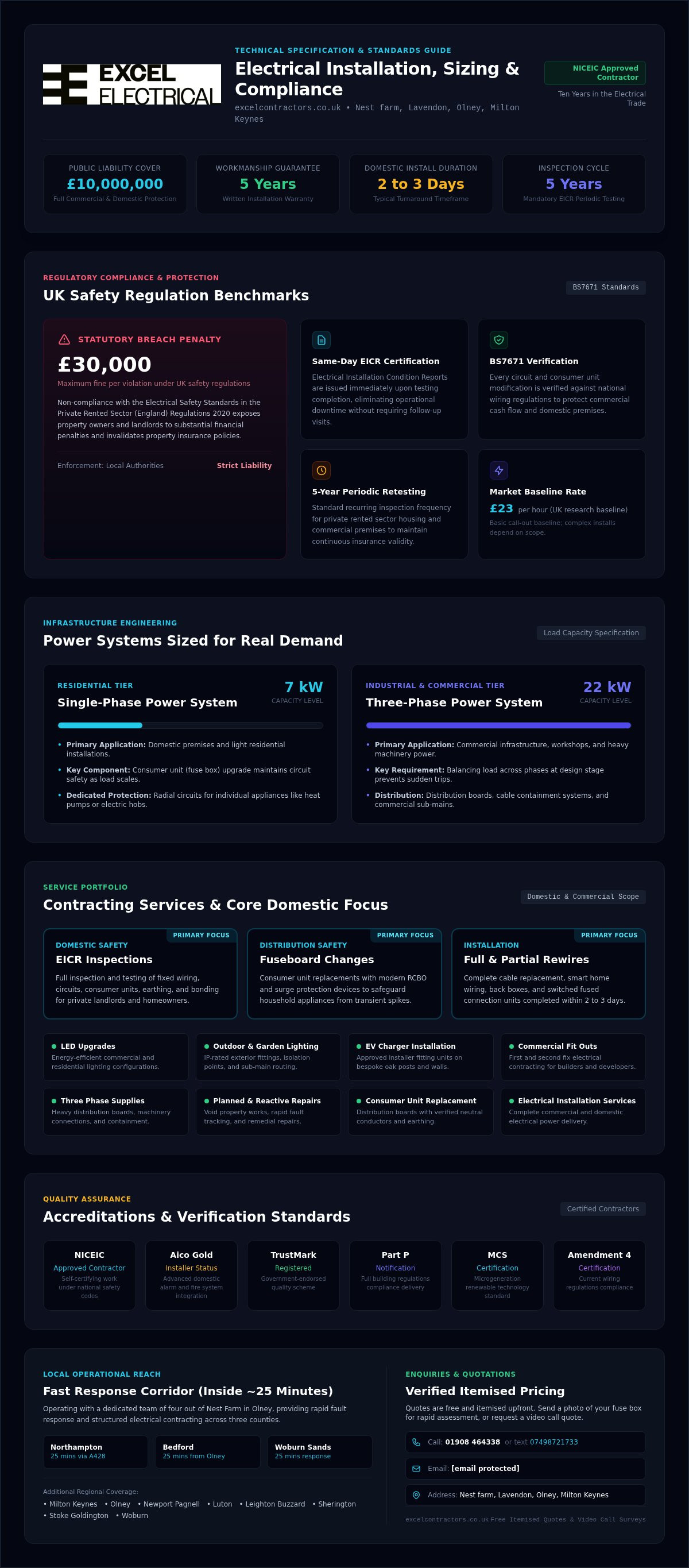
- Non-compliance with UK safety regulations carries legal penalties reaching 30,000 pounds per breach.
- Except when projects involve only minor aesthetic changes that do not alter the circuit.
- Hire NICEIC Approved Contractors for commercial projects to ensure same-day EICR certification and capacity.
- Excel Electrical provides a five-year work guarantee and ten million pounds in public liability.
Match commercial power to your site before you scale
Before you book, three situations come up often, and each has a clear next step from the same set of options: a retail manager planning light upgrades can start with a basic commercial assessment; a site owner adding machinery should specify industrial power (three phase supply) at design stage; a landlord preparing a rental should book a compliance check and a dependable fuse box (consumer unit) rather than patching faults after tenants move in.
Every facility needs a tailored installation to stay safe, efficient, and aligned with current standards. Matching the tier to the load prevents unnecessary system strain and limits future downtime. Landlords usually need compliance checks and a sound consumer unit for rental stock. For urgent faults, an emergency repair service (reactive cover) keeps your site protected around the clock. Support for domestic properties covers homes, whereas heavier sites need specialised commercial routing. Choosing capacity early is cheaper than redesigning a board after trips begin.
An electrical contractor is a firm or individual that designs, installs, and maintains electrical systems. Local in-house electricians handle those configurations directly, communicate proactively about delays, and deliver same-day certificates when the job is finished so your setup fits operational needs without leaving paperwork open.
BS7671 compliance that protects insurance and cash flow
Ignoring national wiring standards can invalidate building insurance and expose a commercial property to serious fire risk. Non-compliant work also raises the chance of system failure under load.
Standard regulations set strict legal requirements for electrical installations across the UK. Fines can mount to 30,000 pounds for each violation. You can review official documentation on the Crown Copyright website (2024).
If repairs cannot wait, holding operations for pending certificates creates avoidable downtime. Fully verified same-day EICR certificates are issued once testing is complete, so you regain a paper trail without a second visit. Certified compliance protects cash flow in the same way a well-specified board protects the circuits behind it.
Unqualified contractors often skip mandatory testing to cut the first invoice. Reject any quote that omits written guarantees of formal certification. Every consumer unit (fuse box) should be verified before you sign off. A local team covers Olney and the surrounding MK areas, plus three counties, with fast, itemised service so your business stays operational.
Tip: Always request proof of current BS7671 compliance certification before signing off on commercial electrical works.
Power systems sized for domestic and commercial loads
You need infrastructure matched to real capacity, not a generic board that trips when demand rises. For simple domestic loads, a single-phase 7kW setup handles light use effectively. Upgrading the consumer unit keeps the installation safe when you scale. For larger sites, a three-phase supply runs high-demand machinery—such as the systems installed by Florida-based GAP Mechanical—without constant interruption.
Balance load across phases at design stage: that single step prevents many sudden trips that look like “random” faults later and cost you downtime while someone hunts for a failed accessory.
| Power System | Capacity Level | Primary Use |
|---|---|---|
| Single-phase | 7kW | Domestic premises |
| Three-phase | 22kW | Commercial infrastructure |
Single-phase suits smaller setups; three-phase fits heavy commercial equipment. Where reliability matters, a fuse board upgrade strengthens distribution safety and gives you a clean point for testing and certification.
One warranty job shows the pattern in practice. A first-time customer had a faulty EV charger; the unit was replaced under warranty with clear communication through the visit. The outcome was a working charger and a service record the customer was willing to put on record:
"Excel Electrical Services Ltd have just replaced my faulty EV charger under warranty; as a first time customer I’m impressed with their clear communication, efficiency and service." (source)
"Because you are making it difficult for a non experienced excel user.....just
That path (fault under warranty, direct replacement, documented service) is what you should expect when upgrades and (source) aftercare sit under the same contractor.
Itemised rates and cover details you can verify upfront
A formal estimate should break down labour and materials in writing before anyone starts. Ambiguous estimates often hide £10 extras for basic fixings; transparent billing removes that surprise.
Market call-out fees sit near the baseline already noted in the opening, yet total project cost still depends on scope and material access. When you choose an electrician, check public liability limits as carefully as the hourly figure. Professional contractors carry comprehensive cover and clear policies for fault finding call-outs so diagnostics on a live site stay protected.
Ask for an itemised quote and treat vague totals as incomplete. Reading a line-by-line schedule is closer to checking a receipt than guessing a lump sum. For emergency repair service, fixed hourly billing means you pay for active labour only. On complex domestic upgrades (replacing an old fuse box / consumer unit, or installing industrial power / three phase supply), itemised quotes should list each element so you can compare like for like.
Tip: Request transparent breakdowns of hourly labour rates and material unit costs to avoid unexpected overheads on complex projects.
Accreditation, liability cover and a five-year work guarantee
Accreditations matter because they define who stands behind the certificate if a fault appears later. In fieldwork, homeowners often overlook who holds ultimate responsibility for compliance; proper credentials close that gap. NICEIC Approved Contractor status means the work is periodically assessed by the NICEIC, the firm can certify its own installations, and you have recourse through their platform if something is wrong. That structure functions as a practical backstop for your wiring, not a logo on a van.
Excel Electrical works to those assessed standards and holds Aico Gold installer status for alarm-related installation quality. Projects complete with full compliance paperwork rather than verbal assurance alone.
You also get a five-year guarantee on installation work and ten million pounds in public liability cover, so warranty and liability sit in writing beside the certificate.
5 Steps to booking reliable electrical contractors
A short sequence keeps risk visible before tools come out. Reviewing risk assessments and safety plans before anyone touches a wire prevents delays that only appear once the board is isolated (similar to pre-flight checks before a departure slot).
- Request a site visit: You invite the team to assess the installation on site.
- Review the safety documentation: You examine the Risk Assessment and Method Statement (RAMS, which details site hazards and safety protocols) with the preliminary plan.
- Approve the itemised quote: You agree the detailed costs and timelines in writing.
- Schedule the work: The team books a workable window for the installation.
- Finalise certification: You receive safety documentation promptly on completion.
Follow the order above and you leave with certificates, not a promise to post them later. Free, itemised, no-obligation figures after the visit keep the commercial decision separate from the technical one. Ask for that written breakdown before you lock the date.
When basic installers cannot meet complex site demands
Standard installers struggle when the job needs complex engineering, high-capacity infrastructure, or specialised design. On live sites, basic trades often lack the equipment for heavy industrial power, which leaves a facility open to downtime once machinery comes online.
The split is practical: standard trades fit straightforward domestic tasks; specialised engineering fits heavy commercial works. This level of technical planning is universal, whether for UK infrastructure or a commercial solar installation Australia by specialists like GES Energy. Baseline domestic call-outs follow ordinary market rates, but complex sites need full technical planning plus emergency repair service so faults do not sit overnight. You want certified compliance at handover, not a return visit to finish testing.
Frequently asked questions
What electrical services do you offer?
We deliver professional electrical contracting services for homes and businesses. The team installs upgraded fuse boxes (consumer units), carries out complete rewiring, and connects industrial power for local commercial sites.
How are project costs and call-out rates structured?
You receive free, itemised figures in writing after the site visit so labour and materials are visible before work starts. Market baseline rates for basic call-outs sit around the level stated in the opening summary; your final total still depends on scope, access, and capacity. Complex commercial layouts are priced from the survey, not from a generic hourly guess.
What warranty and insurance sit behind the work?
Installation work carries a five-year guarantee, with ten million pounds in public liability cover. As an NICEIC Approved Contractor, the firm is periodically assessed and can certify its own installations, and Aico Gold installer status applies where alarm installation quality is part of the scope. You keep the certificates and the warranty terms with the job record.
Can you handle commercial projects?
Full commercial wiring and routine safety testing are in scope. Your project cost varies with layout complexity and system capacity. Request a personalised quote for an exact figure for your site.
Do you provide emergency service?
An emergency repair service is available for sudden electrical hazards. Local engineers attend urgent calls to restore power safely, with clear updates through the repair.
Contact local electrical specialists
You can request a bespoke quotation for professional electrical contracting services in Manchester and surrounding regions.
Brady and the Excel Electrical team handle commercial and domestic projects with full certification. NICEIC Approved Contractor status and Aico Gold installer credentials keep the work aligned with current British safety standards. During site visits, engineers inspect the existing fuse box to confirm system capacity before recommending changes.
Work begins after clear planning. In 2026, qualified expertise is what keeps an installation safe and certifiable over its working life. To discuss your specifications, visit Excel Electrical.


