

What if the call-out charge covers attendance but not diagnosis or repair? When an electrical fault needs urgent attention, it’s understandable to want a clear answer about the cost of emergency electrician call out UK homeowners could face and what the bill includes. The charge may be separate from labour and parts, or include an initial period of work, so the details matter.
This guide explains the difference between a call-out fee, fault-finding and repair work, and the job details that can affect an itemised quote. You’ll learn what to clarify before work starts, including whether travel, materials or making good are included. If there are sparks, smoke or a risk of electric shock, keep clear of the affected area and don’t attempt electrical repairs yourself. Excel Electrical provides emergency electrical services in Milton Keynes and nearby areas. We’re NICEIC Approved and TrustMark registered. We’ll also explain how to request local help and a free quote, including by video call.
Key Takeaways
- The cost of emergency electrician call out UK customers pay can depend on when help is needed, the fault and the work involved.
- Separate attendance, diagnosis, labour, parts and any further agreed work when reviewing an itemised quote.
- Compare call-out, time-based and fixed-quote arrangements by checking what labour and parts each includes, and what it excludes.
- Keep people away from electrical hazards, describe the symptoms clearly and only isolate power if you can do so safely.
- Excel Electrical provides emergency electrical help in Milton Keynes and nearby areas, with free quotes and video-call quotes.
What affects the cost of an emergency electrician call-out in the UK?
There isn’t one UK figure that describes every emergency electrical job. The cost of emergency electrician call out UK households face depends on what has happened, where the fault is and what work is needed to make the installation safe and resolve the problem. A loss of power to one circuit, for example, may need a different investigation from a fault affecting several areas of a property.
A call-out charge relates to attending or assessing a reported fault. The term alone doesn’t tell you what the charge includes. It may cover attendance, assessment or another defined part of the work. The quote should spell out the arrangement. Diagnosis, repair labour, parts and any follow-up visit may be separate items.
What might a call-out charge cover?
Charge structures vary, so establish what the quoted charge covers before work begins. Does it include attendance only, an initial assessment or any labour? Ask how materials and additional work will be charged. This helps you distinguish the first visit from a repair agreed after the electrician identifies the fault.
For example, an electrician may need to investigate why a circuit keeps tripping before defining a repair. The initial assessment and the eventual repair are separate parts of the job, even if both happen during the same visit. If a part is needed or further work is proposed, ask for the scope and charge to be explained before agreeing to proceed.
Why can urgent electrical work cost more than planned work?
Urgency can affect when attendance is needed and how the job is arranged. The time of attendance and travel to your property may affect the work’s scope, but there isn’t one emergency surcharge or out-of-hours rate that applies to every electrician. A clear quote should explain any attendance or travel charge relevant to your job.
The fault itself also affects the assessment. Its location, how accessible the wiring is and whether one or several circuits are affected can influence the diagnostic work needed. A visible symptom doesn’t always identify its cause, so the repair may not be clear until the electrician assesses the installation. Read more about electrical safety and why faults need careful assessment rather than guesswork.
Once the fault has been diagnosed, the proposed repair can be described more precisely. The final bill may reflect the agreed repair scope and any required parts, as well as the initial attendance and assessment. If resolving the fault requires a separate visit, establish what that visit covers and how it will be charged before arranging it.
When comparing local quotes, look beyond the headline call-out charge. Check what the electrician will do at the first visit, what diagnosis includes, and which repair work or parts are additional. This gives you a clearer picture of your specific job than a general figure that may not reflect its circumstances.
Which details can change an emergency electrician’s quote?
An emergency quote should reflect the work needed at your property, not just the symptom you report. A tripping circuit, loss of power or unusual smell can have different causes. The electrician needs to assess the installation before defining a repair. To understand the cost of emergency electrician call out UK jobs, look at how each part of the work is scoped.
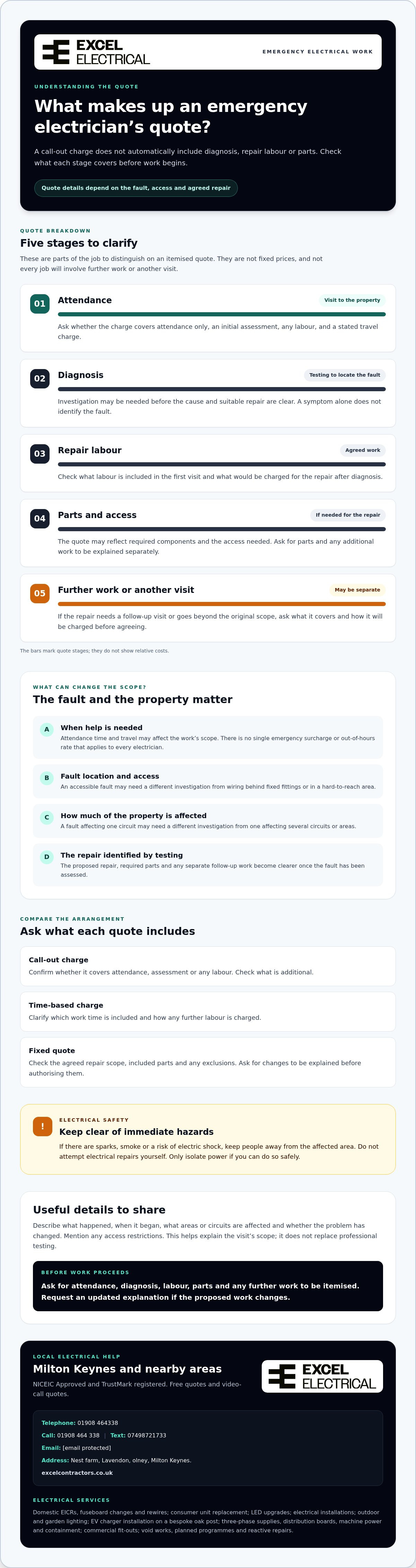
A quote may separate the job into these stages:
- Attendance: the visit to your property and any stated travel charge.
- Diagnosis: investigation and testing to locate the fault.
- Labour: the time and work involved in the agreed repair.
- Parts: components needed once the cause is identified.
- Further work: additional repairs or a later visit, agreed separately.
These stages show what the quote covers and where a new cost could arise. Ask for any proposed change to the work to be explained before you agree to it.
How fault diagnosis affects the scope of work
Repeated tripping, loss of power or a burning smell are useful symptoms to report, but they don’t identify the cause by themselves. An electrician may need to test the installation to find the fault and decide what repair is suitable. A clear account of when the problem began, what was affected and whether it has changed helps explain the visit’s scope. It doesn’t replace professional testing.
Access and fault location matter. A fault in an accessible area may need a different investigation from one behind fixed fittings or within a circuit serving several rooms. The number of affected circuits can also shape the diagnostic work. Excel Electrical traces faults with test equipment rather than guessing, then prices the repair before carrying it out. The HSE’s information on UK electrical safety regulations provides further context on electrical safety.
Parts, access and follow-up work
Testing may show that a replacement part is needed or that the issue involves a wider section of the installation. The quote can reflect the part, labour and access needed for the agreed repair. If a recommended improvement is separate from the immediate work, ask for it to be listed separately. That way, you can distinguish the urgent repair from later work.
Tell the electrician what you have observed and mention any access restrictions, such as locked rooms or difficult-to-reach areas. Don’t expose wiring or remove fittings to help with diagnosis. If testing identifies work beyond the original scope, request an updated explanation before authorising it. This keeps the decision and agreed work clear.
Planned maintenance can help identify electrical issues before they become urgent. Excel Electrical’s professional electrical maintenance services support a planned approach alongside emergency work.
Call-out fee, hourly rate or fixed quote: what is the difference?
A call-out charge doesn’t automatically include the full repair. It describes one part of a pricing arrangement, while labour, parts and further work may be charged separately. The cost of emergency electrician call out UK customers need to compare depends on the scope behind the quote, not just the label used for the charge.
Use this table to identify what each structure means for your job. The terms alone don’t confirm what’s included, so look for the stated work and any exclusions.
| Quote structure | What to establish |
|---|---|
| Call-out | Does it cover attendance, assessment or any labour? Are parts and repairs separate? |
| Time-based | How is labour measured, and are attendance, parts or additional tasks charged separately? |
| Fixed quote | Which diagnostic and repair tasks are included? What parts, further work or exclusions sit outside the agreed scope? |
What to compare when you receive a quote
Compare quotes on the same basis. Check that each describes the same reported fault, diagnostic work, repair tasks and included parts. If one quote covers investigation only and another includes a defined repair, their totals aren’t like-for-like. Ask how the electrician will explain uncertainty if testing reveals a different fault, and whether extra work needs a separate quote or your approval before it starts.
Write down the symptoms you reported and match them to the quote. It should use plain language to distinguish the known fault from work that depends on test results. This makes it easier to see what you’re agreeing to and what may need a revised scope.
When is an itemised quote useful?
An itemised quote separates the proposed work into clear parts, such as attendance, diagnosis, labour, materials and remedial work. You can see which tasks address the reported problem and which are additional recommendations. If a test or inspection forms part of the proposal, check that its purpose and scope are stated. Excel Electrical’s electrical testing and inspection helps customers understand planned testing alongside fault work.
Excel Electrical provides free, itemised quotes, including video-call quotes. A breakdown gives you a practical basis for deciding whether to proceed with the repair as quoted or discuss a separate recommendation. Before work begins, check the agreed tasks, what the price covers and how the electrician will seek your approval if the scope changes. That clarity is useful whether the quote is call-out based, time based or fixed.
What should you do before an emergency electrician arrives?
Focus on keeping people safe and giving the electrician a clear account of the fault. These steps won’t diagnose or repair the problem, and they don’t guarantee a lower bill. They help you explain what has happened and follow safe instructions while you wait.
- Protect people. Keep household members and pets away from the affected area, especially if you can see damage, smoke or sparks.
- Avoid contact. Don’t touch exposed wiring, damaged fittings or equipment that may be unsafe. Don’t open or attempt to repair electrical fittings.
- Isolate power only if safe. Switch it off only if you know which switch controls the affected circuit and can reach it without going near a hazard. Otherwise, leave it alone.
- Report what you’ve noticed. Tell the electrician which areas are affected, when the issue began and whether you’ve seen warning signs or made recent changes. Follow their professional advice.
What information helps describe the fault?
Note which lights, sockets or areas have stopped working. Say whether the problem is constant or intermittent, and whether a breaker trips repeatedly. Report heat, smoke, a burning smell or visible damage immediately. Mention any recent changes, such as electrical work or new equipment, if relevant. Don’t touch fittings or try to recreate the fault to gather more information.
What is safe while you wait?
Keep people clear of visibly damaged electrical equipment. Don’t touch, open or repair fittings. If you can safely move away from the affected area, do so. If there’s an immediate threat to life or a fire, call 999 for the emergency services. For other concerns, contact the electrician and follow their instructions. Don’t approach a hazard to switch off power.
Clear information can help the electrician understand what needs assessing, but the cause still needs professional diagnosis. A reported symptom doesn’t establish which repair is required, and preliminary checks shouldn’t replace testing. If you’re unsure whether something is safe to approach, stay away and describe it instead.
If an electrical fault needs attention in Milton Keynes or nearby, Excel Electrical provides emergency electrical services and free, itemised quotes, including video-call quotes. Request help with an electrical fault at Excel Electrical, call 01908 464 338 or text 07498721733. You can also email [email protected]. The address is Nest farm, Lavendon, olney, Milton Keynes.
Getting emergency electrical help in Milton Keynes and nearby areas
Excel Electrical provides emergency electrical services in Milton Keynes, Olney, Newport Pagnell, Northampton, Bedford, Luton, Leighton Buzzard, Sherington, Stoke Holding Ton, Woburn and Woburn Sands. If you’re dealing with an urgent fault, explain what you’ve noticed and where it’s happening. A clear description helps the electrician understand the issue and discuss the next steps with you. The cost of emergency electrician call out UK customers face depends on the reported fault and agreed work, so ask for the proposed scope to be set out clearly.
Excel Electrical is a NICEIC Approved Contractor and TrustMark registered, with ten million pounds of public liability insurance. Installation work comes with a five-year guarantee. These credentials and the stated guarantee offer useful context when arranging electrical work, while an itemised quote sets out what your specific job involves.
What Excel Electrical can help with
Domestic work includes Electrical Installation Condition Reports (EICRs), consumer unit upgrades, full and partial rewires, kitchen rewires and bathroom electrical upgrades. The team also carries out electrical maintenance, testing and inspection, emergency electrical services, EV charger installations, LED upgrades and outdoor lighting. This covers urgent faults as well as planned work in homes and rented properties.
For commercial and building projects, services include commercial electrical work, three-phase supplies, distribution boards, machine power and containment. Excel Electrical also undertakes commercial fit-outs, void works, planned programmes, reactive repairs, and first- and second-fix work. Describe the property and work required so the quote can address the relevant tasks.
How to request a free quote
Excel Electrical offers free, itemised quotes and video-call quotes. A clear breakdown helps you understand the proposed work and distinguish the immediate repair from any additional tasks. Share the fault symptoms, your location and the areas affected when you enquire. For planned domestic work, include whether you need an EICR, a consumer unit upgrade or a rewire.
To enquire, call 01908 464 338 or text 07498721733. You can also email [email protected]. Excel Electrical is based at Nest farm, Lavendon, olney, Milton Keynes.
For help with an electrical fault or planned work in the local area, request a free electrical quote.
Take the next step with a clear scope
Uncertainty about the cost of emergency electrician call out UK households may face shouldn’t leave you unsure what to do next. If you have an electrical fault, focus on safety and give the electrician a clear account of what you’ve noticed. Before work starts, make sure you understand the proposed scope and how any further work will be agreed. A clear conversation helps you make an informed decision without guessing at the cause or repair.
Excel Electrical is a NICEIC Approved Contractor and TrustMark registered, with ten million pounds of public liability insurance and a five-year guarantee on installation work. You can request a free, itemised quote or arrange a video-call quote to discuss the work. Call 01908 464 338 or text 07498721733, or email [email protected]. Request a free, itemised electrical quote.
Frequently Asked Questions
Does an emergency electrician’s call-out fee include the repair?
Not necessarily. A call-out fee may cover attendance or assessment, while labour, replacement parts and repair tasks are charged separately. Before authorising work, check whether the electrician will stop after diagnosis and provide a repair quote, or proceed with a defined repair under the agreed scope. If testing uncovers another issue, ask for the options and any revised charge before approving further work.
Can I get a free quote for an emergency electrical fault?
Yes. Excel Electrical offers free, itemised quotes and video-call quotes. Describe the fault, share your location and mention any warning signs. Call 01908 464 338 or text 07498721733, or email [email protected]. Excel Electrical is based at Nest farm, Lavendon, olney, Milton Keynes. A breakdown of the proposed tasks helps you understand the work before agreeing to it.
How quickly can an emergency electrician arrive?
Arrival time depends on the electrician’s location, current work and journey, so a specific timeframe can’t be promised. Give your full address and a concise description of the fault when you enquire. If there’s an immediate threat to life or a fire, call 999 rather than waiting for an electrician. For other urgent faults, explain any warning signs clearly when you make contact.
Should I turn off the consumer unit if an electrical fault occurs?
Only switch it off if you can reach it safely and know which switch controls the affected circuit. Don’t approach it if there’s smoke, heat, water or visible damage nearby, or if you’re unsure. Keep others away, and don’t remove the cover or touch wiring. If there’s an immediate fire or danger to life, call 999.
Can an electrician identify the cause of a fault over the phone?
An electrician can use your description to understand the symptoms, but can’t reliably confirm the cause remotely. Different faults can produce similar signs, and diagnosis may require inspection and electrical testing at the property. A video call can help you show what you can see without touching equipment. Don’t move covers or expose wiring. Follow professional advice and keep clear of anything unsafe.
Do landlords need an EICR after an emergency electrical repair?
An emergency repair doesn’t automatically mean a landlord must arrange a new EICR. In England, the Electrical Safety Standards in the Private Rented Sector (England) Regulations 2020 require inspection and testing at least every five years. Keep records of repair work and track when the current report is due. If the fault raises wider safety concerns, arrange an appropriate inspection rather than relying on the repair alone.


