

What if the electrical fault you can’t see is more dangerous than the fitting you plan to replace? DIY electrical work risks often lie behind walls or inside connections, where an installation fault may go unnoticed until it causes electric shock, fire or damage to your home.
It’s understandable to think a small job looks straightforward. But appearance alone can’t confirm that wiring is safe, and the rules for assessment or notification depend on the work involved. This guide explains the hazards to consider before starting, why Building Regulations Part P requirements matter in England, and when to contact a qualified electrician. You’ll also learn what information to share when arranging an assessment.
Excel Electrical provides domestic electrical services, including electrical maintenance, EICRs, rewires, consumer unit upgrades, testing and inspection, emergency electrical services, kitchen rewires, bathroom electrical upgrades and EV charger installations. The company serves Olney, Milton Keynes and surrounding areas. To ask about a quote, contact Excel Electrical by email or through its website.
Key Takeaways
- DIY electrical work risks can include faults hidden from view. A job’s appearance alone can’t confirm that it’s safe.
- Electrical mistakes may affect your safety, your property and compliance. Appropriate inspection and testing can help identify faults.
- Use the task guide below to decide when to pause and seek advice from a qualified electrician. Don’t assume a job is safe or permitted just because it seems simple.
- If work has already been attempted, stop and avoid touching exposed parts. Share clear details about what was changed when seeking professional advice.
- Excel Electrical offers domestic electrical services, maintenance, EICRs, rewires, consumer unit upgrades, testing and inspection, emergency electrical services, kitchen rewires, bathroom electrical upgrades and EV charger installations. Contact the company by email or through its website to ask about a quote.
DIY electrical work risks start with hazards you cannot see
Wanting to save time or handle a small repair yourself is understandable. Electrical work deserves extra caution because a neat looking fitting doesn’t show whether the wiring behind it is safe. DIY electrical work means a task undertaken without a qualified electrical professional. A connection can appear finished while hidden faults remain inside a wall, ceiling or consumer unit.
Electrical DIY can expose you to shock or burns and may create faults that increase the risk of fire or property damage. These outcomes aren’t inevitable, but mistakes can be hard to spot without suitable inspection and testing.
What makes electrical work hazardous inside a home?
Contact with live parts can cause electric shock and burns. The nature and severity of an electrical injury can vary, but even brief contact can have serious consequences. Damaged cables, components that aren’t suitable for the installation, or incorrectly connected wiring can also create faults and fire risks.
Some hazards aren’t visible at the point of work. Cables may run behind plaster or through confined spaces, and previous alterations can mean the installation doesn’t match what you expect. Without knowing what has already changed, disturbing a fitting or cable could expose a fault or affect another part of the circuit.
Why switching off a circuit may not be enough
You may not know whether you’ve identified the correct circuit. A labelled switch or a circuit that appears to be off doesn’t, by itself, confirm that the work area is safe. Older or altered installations may also contain unexpected connections or existing faults. Don’t work on live electrical equipment or rely on guesswork to establish safety. If you’re uncertain, stop and seek advice from a qualified electrician.
Excel Electrical provides domestic electrical services and can advise on electrical maintenance, testing and inspection, and other home electrical work. Contact the company by email or through its website to ask about an assessment.
How DIY electrical mistakes can affect safety, the property and compliance
The effects of an electrical mistake may not appear straight away. A fault can remain hidden even if a fitting seems to work, then become apparent during a later inspection or when another person works on the installation. Suitable inspection and testing can help identify problems that aren’t visible from appearance alone.
Compliance depends on the work being carried out and where the property is, not simply on who owns it.
Shock, burns and fire risks from incorrect work
Poor connections, damaged wiring or alterations that don’t suit the installation may create faults. These can affect how a circuit operates and may pose risks to people or property. This doesn’t mean every DIY job will cause harm, but a suspected fault shouldn’t be treated as safe because the fitting looks tidy or appears to work.
If you notice a concern, avoid investigating exposed wiring and seek advice from a qualified electrician. The Electrical Safety Foundation International’s DIY electrical safety guidelines provide general safety information, but they don’t replace UK requirements or a professional assessment.
Could DIY work cause problems with compliance or insurance?
In England, Building Regulations Part P applies to electrical safety in dwellings. The steps required depend on the work, and requirements may differ elsewhere in the UK. Check current official guidance for your location and contact local building control if you’re unsure whether work needs notification or assessment.
DIY work doesn’t automatically invalidate your insurance or create a problem when you sell your home. However, missing records may make it harder to answer questions about alterations or assess the installation later. Keep relevant reports and certificates for work that requires them, along with details of what was changed and when. If documentation is missing, ask a qualified electrician what assessment may be suitable.
Excel Electrical offers EICRs, testing and inspection, rewires and consumer unit upgrades. If you need advice about electrical work in your home, ask about an electrical assessment.
Which electrical jobs are not worth attempting yourself?
Some tasks involve more than the fitting you can see. Fixed wiring, work on a consumer unit, and electrical changes in bathrooms or outdoors may involve hidden connections, existing faults or conditions that are hard to judge without suitable assessment. DIY electrical work risks increase when you can’t confidently understand the installation or what a change could affect.
The table is a prompt to pause and seek advice, not a legal classification of what you may or may not do. Requirements can depend on the work and location. In England, check current Building Regulations Part P guidance and contact local building control if you’re unsure about notification or other requirements.
| Task type | What may be uncertain | When to contact a qualified electrician |
|---|---|---|
| Fixed wiring or a new circuit | Cable routes, existing alterations and how the change may affect other parts of the installation. | Before altering fixed wiring, or if you can’t identify what the existing cables serve. |
| Consumer unit upgrade or rewire | The visible equipment doesn’t reveal the condition of the circuits, connections or the wider installation. | For assessment and advice on the work, testing and any applicable compliance steps. |
| Bathroom electrical work | Moisture and the location of electrical equipment affect what needs to be considered. | If the work involves fixed wiring or you’re uncertain about the requirements for the location. |
| Outdoor electrical work | Equipment and installation need to suit exposure to the elements as well as the electrical system. | Before adding or altering fixed wiring, or if you’re unsure whether equipment is suitable. |
Fixed wiring, consumer unit work and major alterations
A consumer unit upgrade or rewire needs more than a check of visible components. An electrician can assess the installation and determine what testing or further work may be appropriate. A photo of your fuse box can help start a conversation about the existing consumer unit, but it can’t show the condition of hidden wiring or replace inspection. For more background on testing, read this electrical testing guide.
Bathrooms, outdoor electrics and other higher risk locations
An IP rated device has an Ingress Protection classification that indicates resistance to dust and water. That rating alone doesn’t confirm that a product is suitable for a particular position or that the installation is safe. If the task involves fixed wiring, a bathroom, an outdoor area, or anything you can’t confidently assess, ask a qualified electrician before proceeding.
Excel Electrical provides bathroom electrical upgrades, kitchen rewires, EV charger installations and other domestic electrical services. Contact the company to discuss the work you need assessed.
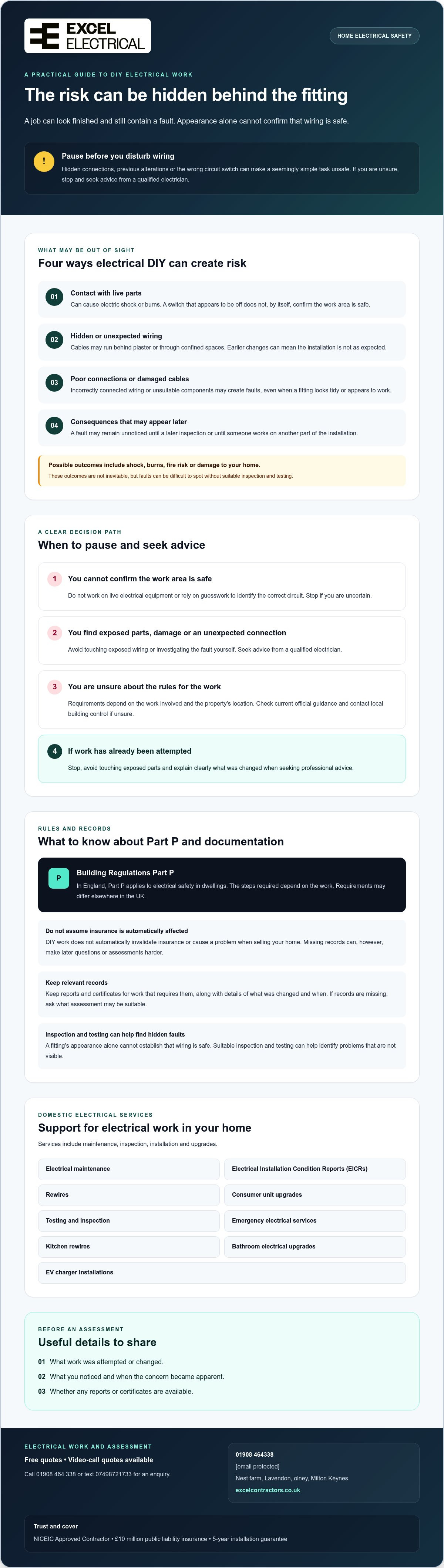
What to do if DIY electrical work has already been attempted
Stop work and don't try to finish or correct it. Keep away from exposed wires or damaged fittings, and don't touch them. Seek advice from a qualified electrician, even if the installation appears to work. DIY electrical work risks may not be visible, and further attempts could make a fault harder to assess.
If there's an immediate danger, such as a fire, injury or an urgent threat to people, move away from the hazard and call 999. For a suspected problem with the electricity supply or network, contact the relevant electricity network operator. Don't approach damaged electrical equipment to investigate.
Warning signs that call for prompt professional assessment
Burning smells, visible damage, repeated tripping or unusual heat around electrical equipment all warrant caution. A warning sign doesn't confirm the cause, so avoid diagnosing it yourself. Don't repeatedly reset a protective device, remove covers or investigate exposed wiring. Stop using the affected area if you can do so without approaching the hazard, then arrange qualified advice.
Information to prepare before contacting an electrician
Share clear, factual details so the electrician can understand what may need attention. Note:
- When the work was attempted and when any issue first appeared.
- What you changed, including fittings or wiring, as far as you know.
- Any warning signs, such as a smell, visible damage, heat or repeated tripping.
- Whether you have reports or certificates relating to the installation.
Photos can help explain the situation, but take them only if you can do so without going near exposed parts or another hazard. Ask what inspection, testing and written documentation may be appropriate. For general routine awareness, see this home electrical maintenance checklist. It's not a guide to carrying out repairs.
Excel Electrical provides domestic electrical services, electrical maintenance, EICRs, rewires, consumer unit upgrades, testing and inspection, emergency electrical services, kitchen rewires, bathroom electrical upgrades and EV charger installations. Contact Excel Electrical about an electrical assessment.
Get electrical work assessed by a qualified local electrician
A qualified electrician can assess the installation, use appropriate testing where needed and explain what should happen next. This helps identify faults that aren’t clear from visible fittings and gives you a clearer picture of any work or documentation required. If you’re weighing up the DIY electrical work risks, ask the electrician to explain the findings and proposed work before you agree to proceed.
Excel Electrical Installations Ltd is NICEIC Approved and TrustMark registered. Check the current status of these credentials before arranging work. For background on what to look for, read this NICEIC Approved Contractor guide.
Choosing a contractor and understanding the work proposed
Check that the contractor’s qualifications and registration are relevant to your job, and ask whether the proposed work falls within their scope. Request a clear explanation of the assessment, any recommended work and the records you’ll receive. If you’re comparing quotes, check that each one describes the work being proposed so you can understand what is and isn’t included.
For domestic work, keep EICRs, test results and any relevant certificates with your property records. These documents can help you understand the installation’s condition and provide useful information if another professional needs to review the work later.
Arrange a quote in Excel Electrical’s service area
Excel Electrical offers domestic electrical services, electrical maintenance, EICRs, rewires, consumer unit upgrades, testing and inspection, emergency electrical services, kitchen rewires, bathroom electrical upgrades, EV charger installations and commercial electrical services. Ask the company directly whether a specific requirement is within its current service scope.
Excel Electrical serves Olney, Milton Keynes, Newport Pagnell, Northampton, Bedford, Luton, Leighton Buzzard, Sherington, Stoke Holding Ton, Woburn and Woburn Sands. Contact the company by email or through its website to ask about a quote.
Choose a qualified assessment for peace of mind
DIY electrical work risks can remain hidden even when a fitting looks finished or appears to work. If you’re unsure about a task, pause and get professional advice. If work has already been attempted, avoid touching exposed parts and explain clearly what was changed and what warning signs you’ve noticed. Requirements also depend on the work and location, so check current guidance rather than assuming a job is exempt.
Excel Electrical Installations Ltd provides domestic electrical services, electrical maintenance, commercial electrical services, EICRs, rewires, consumer unit upgrades, testing and inspection, emergency electrical services, kitchen rewires, bathroom electrical upgrades and EV charger installations. The company is NICEIC Approved and TrustMark registered.
Based in Olney and serving Milton Keynes and surrounding areas, Excel Electrical can discuss your electrical work and provide a quote. Request a quote from Excel Electrical as a first step towards a professional assessment.
Frequently Asked Questions
Is DIY electrical work legal in the UK?
Some DIY electrical work may be lawful, but requirements depend on the work and where you live. In England, electrical work in dwellings must comply with Building Regulations Part P. Certain work may need notification to building control or completion by an electrician registered with a competent person scheme. Rules can differ across the UK. Check current official guidance and local requirements before starting, or ask a qualified electrician if you’re unsure.
Can I change a socket or light fitting myself?
There isn’t a universal answer that makes every socket or light fitting replacement safe or suitable for DIY. The condition of the wiring, the work involved and the location all matter. A fitting that looks straightforward may connect to older or altered wiring. Check current guidance for your location, and don’t proceed if you’re uncertain, notice damage or need to alter fixed wiring. A qualified electrician can assess the job and explain the appropriate next steps.
What are the main risks of DIY electrical work?
DIY electrical work risks include electric shock, burns and faults that may contribute to fire or damage to your property. Poor connections or unsuitable alterations can also affect other parts of an installation, and a fault may remain hidden even if a fitting appears to work. Don’t rely on appearance to judge safety. Stop if you’re unsure, avoid exposed parts and arrange professional advice where needed.
Can DIY electrical work affect my home insurance?
DIY electrical work doesn’t automatically invalidate your home insurance. The effect, if any, depends on your policy terms and the circumstances of a claim. If you’ve carried out work or discover a possible fault, check your policy and contact your insurer for guidance rather than assuming you’re covered or excluded. Keep relevant certificates, reports and details of changes to the installation with your property records.
What should I do if I smell burning near an electrical fitting?
Treat a burning smell near an electrical fitting as a warning sign. Don’t touch the fitting, remove covers or try to investigate exposed wiring. Keep away from the area and seek advice from a qualified electrician. If you see fire or believe there’s immediate danger to people, move to safety and call 999. A smell alone doesn’t identify the cause, so don’t assume the issue has resolved if it stops.
Do landlords need to use an electrician for an Electrical Installation Condition Report?
Landlords in England need an Electrical Installation Condition Report carried out by a suitably qualified and competent person. The Electrical Safety Standards in the Private Rented Sector (England) Regulations 2020 require the installation to be inspected and tested at least every five years. Ask the person arranging the inspection about their qualifications and experience, and keep the report and any related records with the property documents.


